.png)
 2 months ago
🎙️ Daily Podcast (FR) : NViNiO•Podcast™
ADs | ✨ Enhance your Social Media content with NViNiO•AI™ for FREE
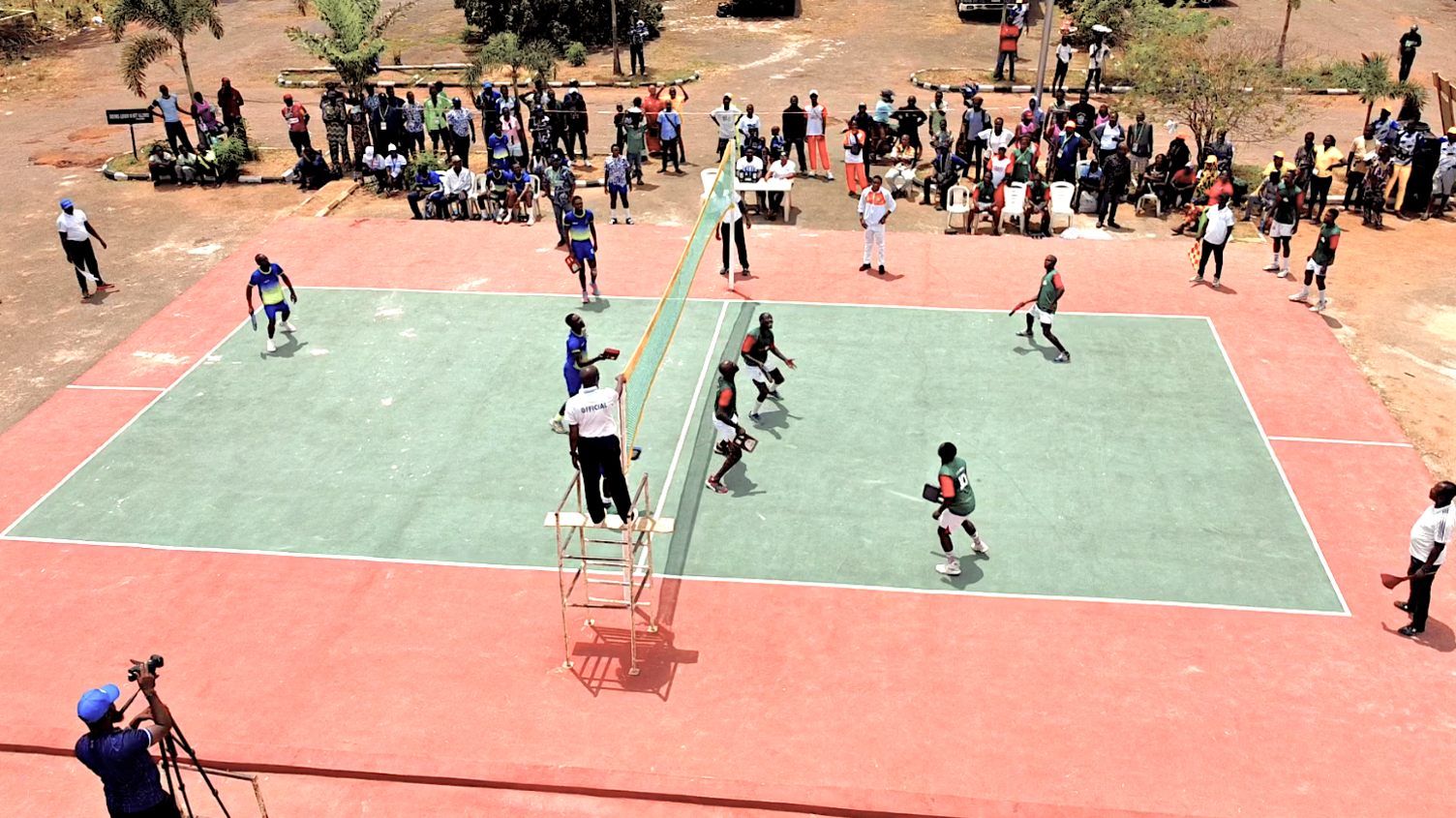
Abula is played on a rectangular court by two teams of four and has similarities to volleyball and tennis
ByEmmanuel Akindubuwa
BBC Sport Africa, Lagos
On a school playground in Lagos four decades ago, a new Nigerian sport was born. Today, its players believe it has the potential to gain interest across the world.
Abula, a fast-paced four-a-side court game named after a popular delicacy enjoyed by the Yoruba people, was invented in 1984 by Elias Yusuf.
It is similar to volleyball, although players use a rectangular bat instead of their hands to hit the ball over a central net.
"I was a teacher of physical education when the idea of Abula occurred to me," Yusuf told BBC Sport Africa.
"Abula combines four classes of food in one meal. This game is a conjunction of four by four."
The dish Abula is primarily made from yam flour with assorted beef, vegetable soup from jute leaf, gbegiri soup made from peeled beans, and stew made from a mix of tomatoes and pepper.
For Yusuf, the inspiration for his game was simple - to engage students in an activity that was both fun and challenging.
The first match in February 1984 saw four teachers take on four students, with the latter winning a contest which set the tone for a sport that blends speed, skill and strategy.
Abula is played on a hard court measuring 16 metres by eight metres with a net which is 2.44m from the ground. It demands both teamwork and individual flair.
Players use a special rectangular bat made of wood and rubber, weighing between half and three quarters of a kilogram, to hit a tennis ball.
Once a serve is made a team is only allowed three touches of the ball on their side of the court before returning it to their opponent.
A rally continues until one team fails to return the ball, then a point is earned.
Teams take it in turns to serve four times in a row, with points able to be won while serving or receiving.
The first team to 16 points, or to 20 if scores are tied at 15-all, wins a set. A match is decided over the best of three or five sets, depending on competition rules.
Each side is allowed four substitutes, which can be used twice in a set.
Players must anticipate where the ball will go, position themselves quickly and decide in a split second how best to return it.
"When it comes to Abula, you have to be very smart," said Sylvester Ike, who captained a team from Bayelsa State at the Nigerian National Sports Festival in May.
"You have to be a very quick thinker and have to be mobile. It's a very cognitive sport."

Elias Yusuf based his invention of the game on the principle of a balanced diet, drawing inspiration from Abula, a traditional Yoruba meal
From its simple beginnings, Abula has been a regular event at Nigeria's biennial National Sports Festival since 1998. It is also played at military camps and school sport events in parts of the country.
Just 10 years after being invented it received patronage from the International Olympic Committee through the Sport for All programme and the Nigeria Olympic Committee.
Although Abula is yet to feature at the African Games, that initial recognition remains a point of pride for its pioneers and strengthened efforts to spread it across the West African country.
But Abula faces the challenges that many emerging sports encounter: limited funding, lack of infrastructure and little media exposure.
Courts are not widely available, equipment is often improvised and competitions are infrequent.
"For now, there is no budgeting provision for this sport," said Olomo Agbadabina, president of the Nigeria Traditional Sports Federation, which monitors the growth of indigenous games like Dambe, Langa, Ayo and Kokowa alongside Abula.
"But with the coming on board of the present National Sports Commission, we have been assured that funding will not be a problem."
However, advocates of the game see these hurdles as opportunities.
If supported with sponsorship and structured promotion, they believe Abula could grow quickly - first across Nigeria and then to neighbouring African countries.
"If we are properly sponsored, we can invite other African countries to play this game," Agbadabina said.
"It can be introduced first to the African Games, then to the Commonwealth Games and the ultimate one - the Olympics."
It is an extremely ambitious vision, but volleyball offers one example of a sport which successfully made the leap from local pastime to international competition.
A blend of athleticism and cultural pride
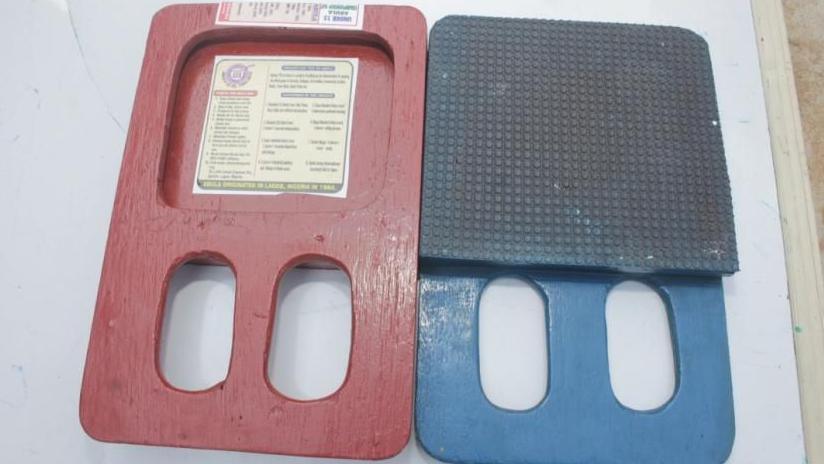 Image source, Afrotradosports.com
When playing Abula, the bat must be held by the handle, with only its face which has a textured rubber surface used to strike the ball
For its founders, Abula is an innovation with a unique Nigerian identity.
In an era where fans crave new sports and new stories, it offers something fresh - a fast, tactical game that is easy to understand but challenging to master.
Daudu Ajayi, a long-serving match official, believes Abula's mix of energy, accessibility and cultural roots could prove appealing.
"Abula is very good for the body. If you play Abula, you look young," he told BBC Sport Africa.
"If you see me now, you think I'm under 50. Whereas I'm over 70."
That blend of fitness and enjoyment has helped the sport maintain its following over the years, particularly in schools and community tournaments.
Abula remains rooted in Nigeria but its players, officials and pioneers believe it is ready for a wider audience.
"I would say Abula has now got into its peak because we now have vibrant young men like me playing," Bayelsa State captain Ike said.
"Abula has everything to be in the international level."
If its supporters succeed, the game that began with teachers losing to their students on a Lagos school court could one day be seen on the world's biggest sporting stage.








 English (United States) ·
  French (France) ·